

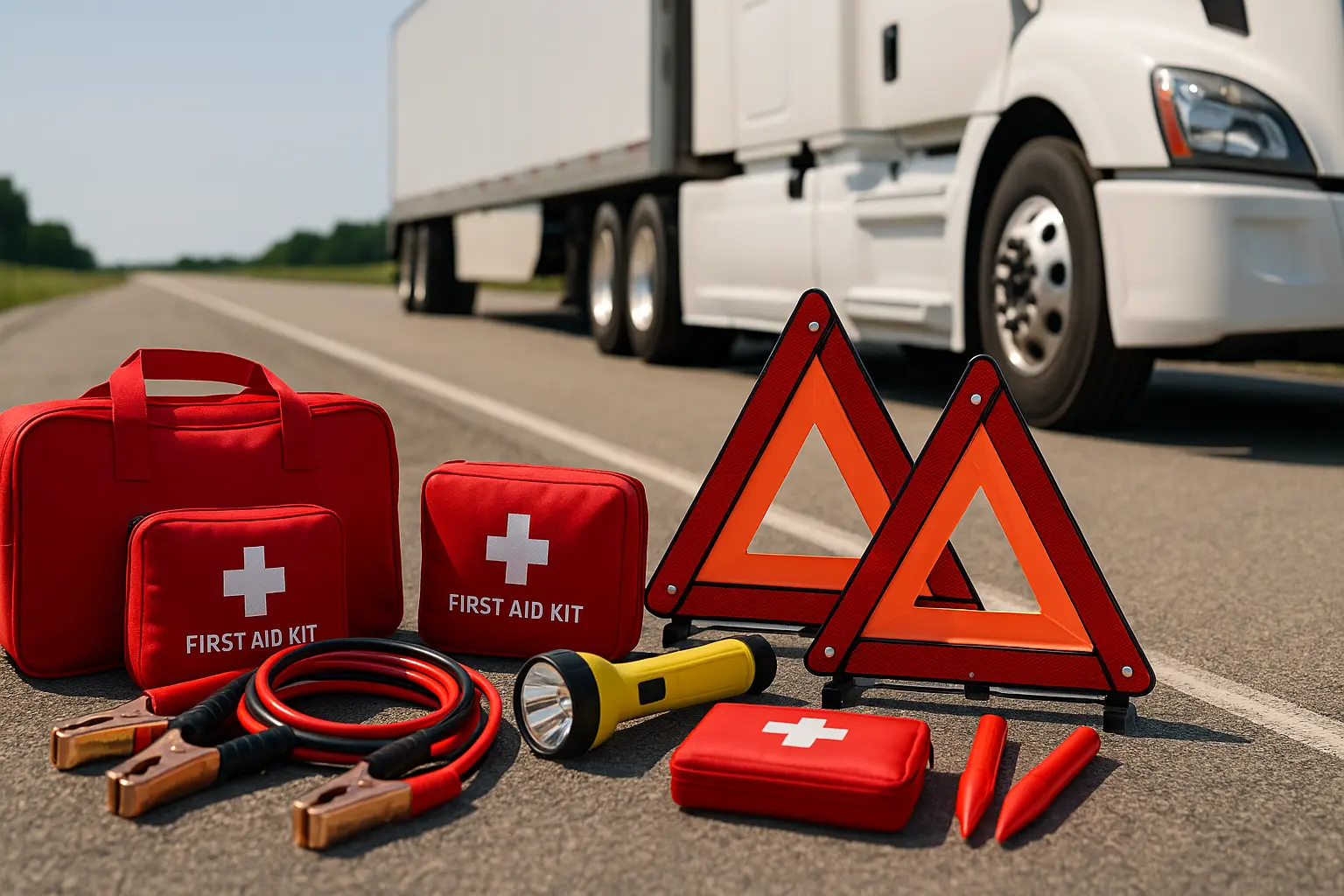
Essentials every cab should carry.
An updated and industry-approved list of critical items that can make a difference in roadside emergencies.
When a truck hits the road, especially in Florida or other regions with extreme climate or long distances, having the best emergency roadside kit for trucks isn’t optional, it’s essential. A well-equipped truck emergency kit isn’t just a precaution; it’s a vital part of fleet management that protects your drivers, your cargo, and your bottom line.
Why a Dedicated Emergency Kit Matters
According to the American Red Cross, key emergency items include flashlights, jumper cables, first-aid supplies, reflective triangles, and non-perishable food and water. But those car-focused kits miss the mark for heavy-duty operations. A commercial truck emergency supplies kit must meet higher standards: longer wait times, larger vehicles, and higher stakes on safety.
A good, heavy-duty truck emergency kit supports not just the driver but the entire fleet system. It minimizes delays, prevents minor issues from cascading, and maintains a reputation for reliability.
Top 8 Items in a Truck Emergency Kit
Here’s a list of essential contents for an emergency roadside kit for trucks, curated from trusted sources like the American Red Cross, Ready.gov, and fleet safety experts :
Jumper cables (6-gauge or heavier) – expect heavy-duty batteries
Tire inflator and sealant kit – Slime’s truck/SUV kit patch flat tires temporarily
Reflective warning triangles or flares – must-have for roadside visibility
LED flashlight + extra batteries – durable and weather-resistant is ideal
Heavy-duty tow strap or chain – strong enough for full-size rigs
First-aid kit (comprehensive) – bandages, antiseptics, trauma supplies
Multi-tool and duct tape – for makeshift repairs
Water and non-perishable snacks – at least 1 gallon per person
Bonus items: gloves, blankets, cat litter for traction, shovel, portable charger, and extra fuses.
Core Checklist for Fleet Managers
To ensure consistent fleet safety, follow this structure when assembling a kit:
Standardize across the fleet: Each truck gets one identical kit in an accessible box or bag.
Inspect monthly: Check fluids, battery cables, batteries, tire sealant expiration, and restock consumables.
Train drivers: Teach them to use each item confidently, don’t assume they’ll figure it out under stress.
Pro Tip: Kit Contents + Documentation = Trust
Well-stocked emergency roadside kit for trucks saves money by preventing small issues from becoming big ones. It also builds client trust because when your crew is prepared, customers know you take safety and reliability seriously.
Our advice: assemble kits using heavy-duty, truck-grade components; don’t rely on car kits repackaged for rigs. Keep everything labeled and drivers empowered.
And remember: this isn’t about carrying gear, it’s about adopting a mindset. Equip your drivers not just for today’s breakdown but for moments when preparedness matters most—before the problem even happens.